SACE Year 12 · South Australia · Opening Term 4, 2026
Press play. The lesson reads itself to you.
An interactive textbook for SACE Year 12 that plays like a lesson — narrated, one idea at a time, stopping where a teacher would stop to ask you something. Then it marks what you wrote and names which marks you dropped, usually in under 7 seconds, at eleven o’clock at night, without booking anyone.
Five subjects, opening Term 4, 2026. There is a free tier that never needs a card. Joining the list costs nothing and we email you once.
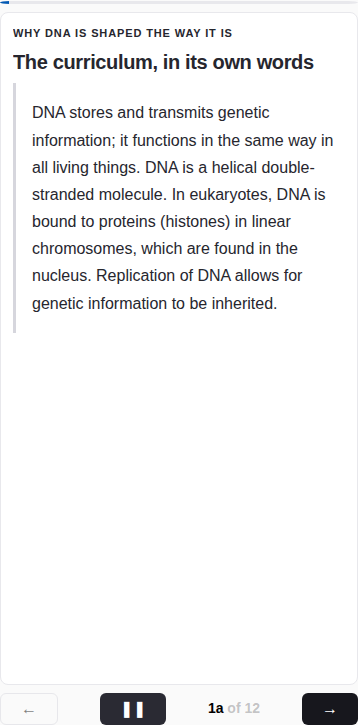
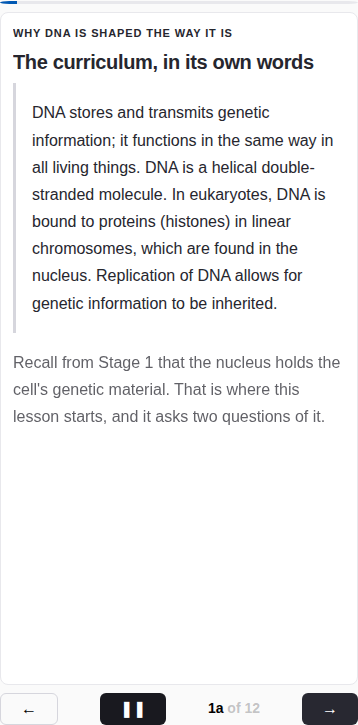
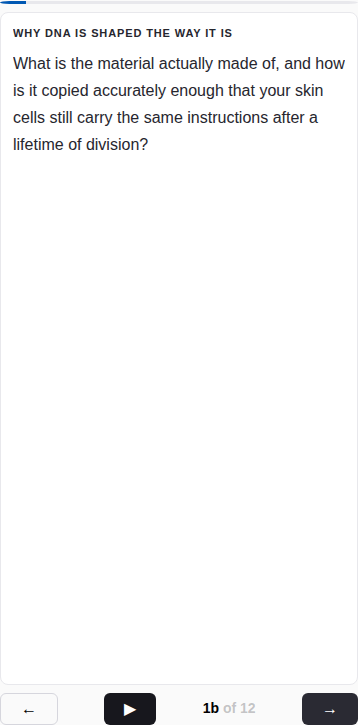
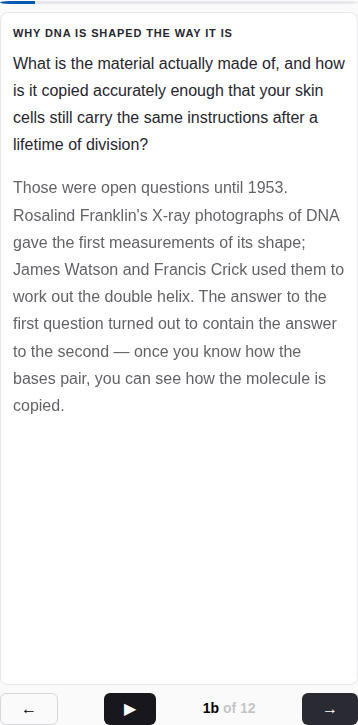
What you just watched
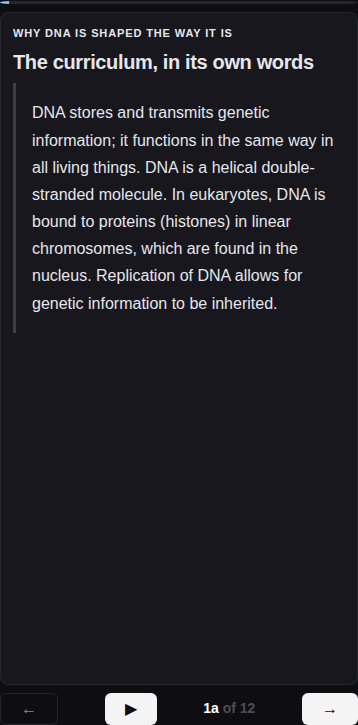
65 seconds of a lesson, exactly as a student gets it.
Every lesson in every subject plays like that. It is read aloud in one voice, it reveals one idea at a time rather than dropping a page of text on you, and it stops at each question and waits — because that is where a lesson stops.
Nothing about it needs headphones. Every control moves the lesson on its own, so with the sound off it is a deck you tap through on the bus, and it is the same lesson either way.
The problem
“3 out of 5” is a grade. It is not feedback.
A number tells you how you did. It does not tell you what to do on Saturday morning. Here, every answer comes back as a list: the marks that were going, the ones you got, and — in a sentence each — why the rest did not come.
Answer one, and watch
This is what “marked” means here.
A real Year 12 Biology question, a real answer, and the real verdicts the platform returned — mark by mark, with the reason under each one.
Describe the role of each of mRNA, tRNA and rRNA in protein synthesis.
Why it agrees with itself
The marking follows written rules, not a mood.
Every mark your subject can award is written down before you ever see it. “Names the structure or term.” “Shows the working, not just the answer.” When you hit submit, your answer is checked against the ones that apply — the same ones, in the same words, every single time.
Which matters more than it sounds. It means it cannot flatter you on Monday and fail you on Friday, and it means the thing you keep dropping has a name — so you can go and fix that one thing instead of “revising Biology”.
It keeps count for you
The same mark, going missing, week after week.
Because every mark has a name, it can tell you which ones you keep losing — ranked, with the questions where each one went. That is a far more useful thing to know than your average: dropping the same two marks in every long answer is a habit, and a habit is fixable in an afternoon.
And it brings it back
Revision that arrives on the day you were about to forget.
Every lesson makes its own recall cards. The deck brings each one back just before the point you would have lost it, and stretches the gap every time you get it right — so the things you already know stop taking up your evenings.
And the small things
The parts you only notice when they are missing.
Search inside the lessons
Not just titles. A phrase you half-remember from a paragraph finds the lesson it was in, across every subject you have open.
Your teacher’s guides, in the course
Exemplars and study guides sit on the course they belong to, so the good notes are where you are already reading rather than in a group chat from March.
Dark, without asking
It arrives the way your phone is already set. Diagrams and graphs are redrawn for it rather than dimmed, so nothing goes grey at midnight.
Opening Term 4, 2026
Be there when it opens.
We are opening with 5 SACE Year 12 subjects and writing them properly rather than quickly. Tell us which one you need and we will write that one first.